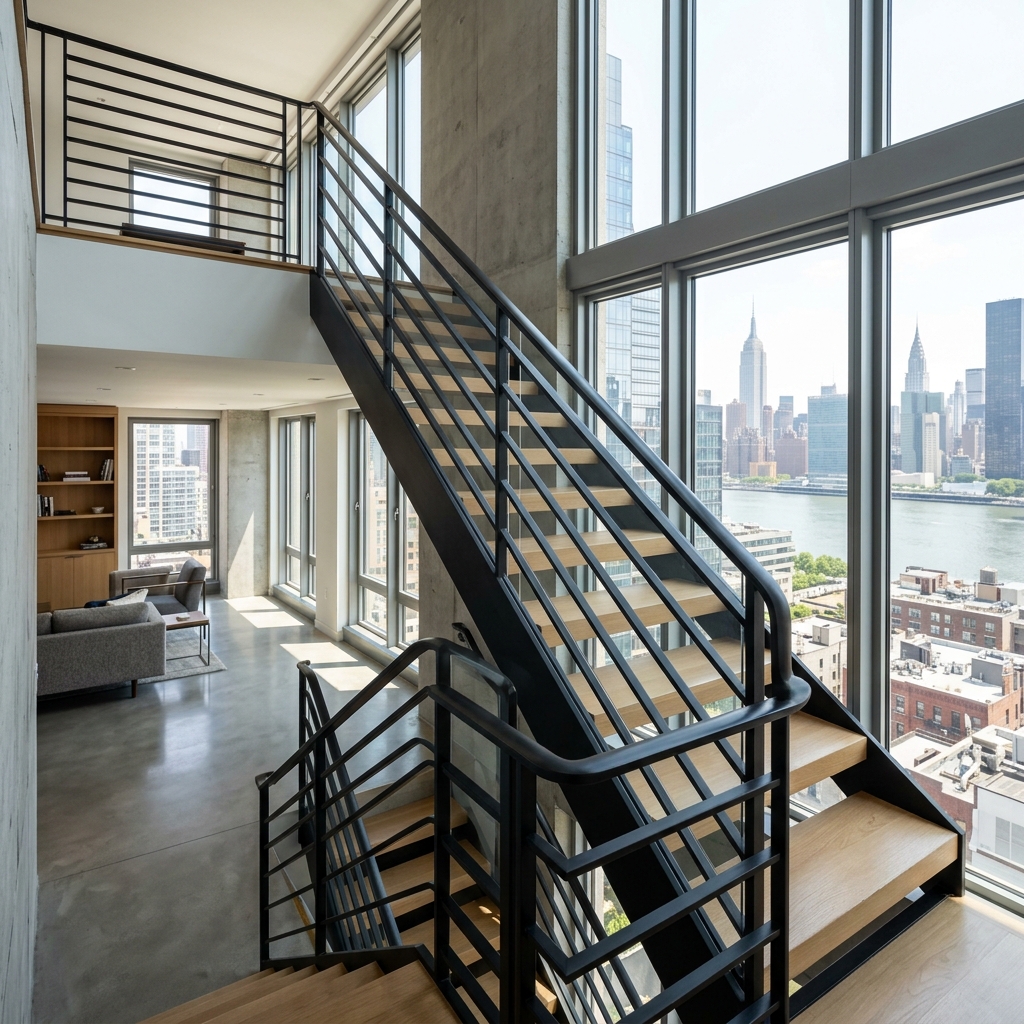
When designing a new railing system for a deck, balcony, or interior staircase, homeowners often find themselves choosing between two popular metals: stainless steel and aluminum. Both offer distinct advantages, but understanding their differences is crucial for making the right choice for your specific application.
Comparing Strength and Weight
Stainless Steel
Stainless steel is incredibly strong and rigid. It can support significant loads and impacts without bending or breaking, making it ideal for structural applications and high-traffic areas. Because of its strength, thinner profiles can be used, achieving a sleek, minimalist look.
Aluminum
Aluminum is significantly lighter than stainless steel—about one-third the weight. While it is strong enough to meet building codes for railings, it is inherently softer and more prone to denting or scratching under heavy impact compared to steel.
Corrosion Resistance
Both metals are known for resisting rust, but they do so in different ways.
- Stainless Steel: Relies on its chromium content, which forms a passive layer of chromium oxide that prevents surface corrosion. For coastal applications, Type 316 stainless steel is essential, as it contains molybdenum, providing superior resistance to chlorides (salt).
- Aluminum: Naturally forms a protective oxide layer when exposed to air. However, aluminum railings are almost always powder-coated, which provides the primary barrier against the elements.
Related: Read our guide on the Best Metals for Coastal Homes.
Aesthetics and Weld Appearance
The Look of Stainless Steel
Stainless steel is typically left bare, finished with either a brushed (satin) or polished (mirror) look. The weld joints, when executed by a skilled fabricator, can be ground smooth and blended flawlessly into the surrounding metal, creating a continuous, seamless appearance.
The Look of Aluminum
Because aluminum is usually powder-coated, it is available in almost any color. However, aluminum welds can sometimes be slightly more visible than blended stainless welds, depending on the fabrication technique.
Cost Comparison
Generally, stainless steel is more expensive than aluminum. The raw material cost is higher, and it requires more specialized labor and time to fabricate, weld, and polish. Aluminum offers a more budget-friendly option without sacrificing structural integrity, though it may lack the premium “feel” of solid stainless steel.
Which Should You Choose?
- Choose Stainless Steel if: You want a premium, modern aesthetic with a bare metal finish, require maximum structural rigidity, or are building a modern cable railing system.
- Choose Aluminum if: You are on a tighter budget, want a specific powder-coated color to match your home’s exterior, or prefer a lightweight system.
Explore our custom metal railing portfolio to see examples of both materials in action.