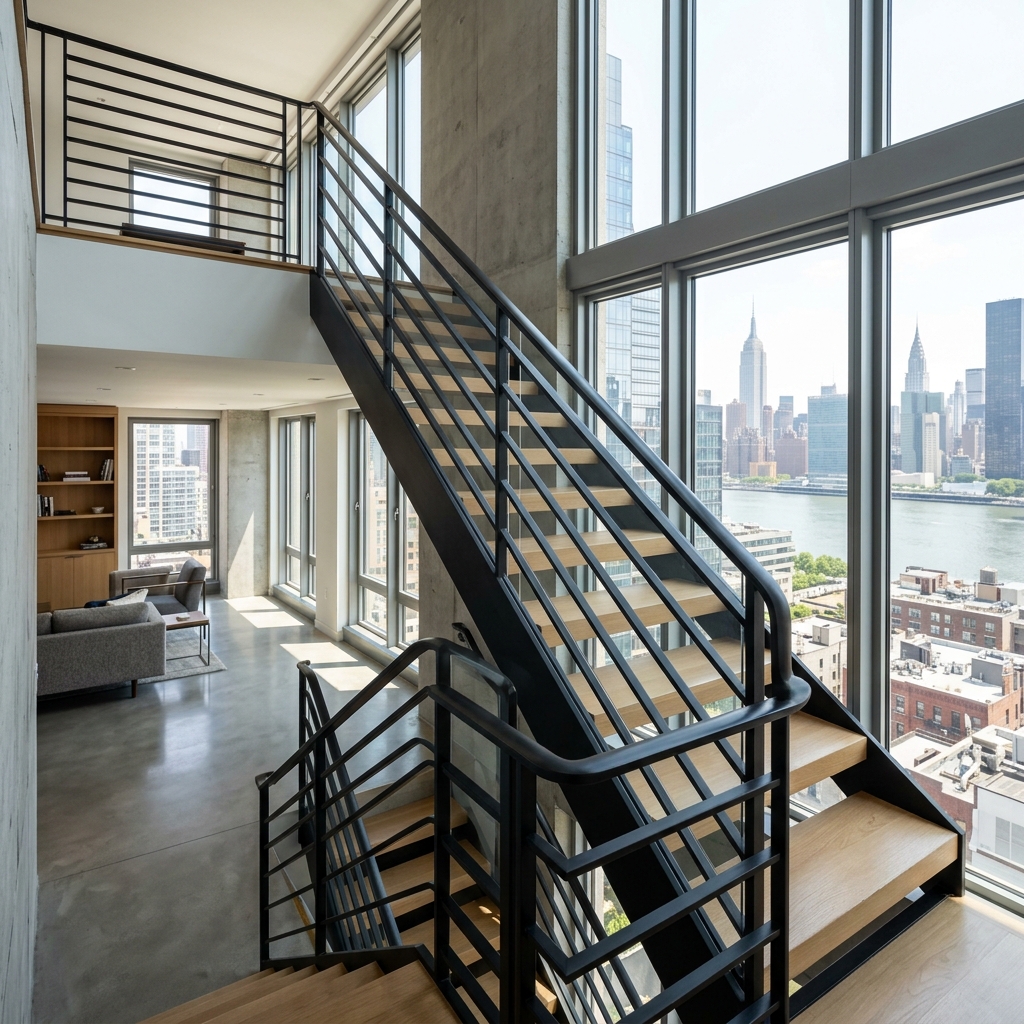
Building or renovating a home near the water—whether it’s on the shores of Long Island or overlooking the East River in Brooklyn Heights—comes with a unique set of challenges. The high salt content in the air, combined with moisture, creates a highly corrosive environment that can rapidly destroy standard metal fixtures.
To protect your investment and maintain the aesthetic of your property, selecting the right metal is non-negotiable.
The Enemy: Saltwater Corrosion
Salt (sodium chloride) acts as an electrolyte, accelerating the oxidation (rusting) process of metals. When choosing materials for exterior railings, gates, or hardware in coastal zones, you need metals that either resist oxidation entirely or form a protective layer when they oxidize.
The Best Metals for Coastal Environments
1. Type 316 Stainless Steel (The Standard)
Not all stainless steel is created equal. While Type 304 is common for inland applications, it will pit and rust in a marine environment. Type 316 stainless steel is the gold standard for coastal homes.
- Why it works: Type 316 contains molybdenum, an alloy addition that drastically increases resistance to chloride corrosion.
- Best Uses: Modern cable railing systems, exterior handrails, and structural supports.
2. Bronze and Copper (The Living Finishes)
If you prefer a more traditional or rustic aesthetic, copper alloys like bronze and pure copper are excellent choices.
- Why they work: These metals do not rust (which is the oxidation of iron). Instead, they oxidize to form a patina (often a beautiful green or brown verdigris). This patina actually acts as a protective barrier against further corrosion.
- Best Uses: Custom door hardware, light fixtures, and decorative accents.
3. Zinc
Zinc is highly resistant to atmospheric corrosion. While it is rarely used for structural elements due to its softness, it is an excellent material for roofing, flashing, and decorative cladding.
What to Avoid (Or Protect Heavily)
Standard Carbon Steel / Wrought Iron: Unprotected steel will quickly succumb to rust in a coastal environment. However, if you must have the look of traditional wrought iron, it requires a rigorous finishing system:
- Hot-Dip Galvanizing: Submerging the steel in zinc to protect it.
- Zinc-Rich Primer.
- Marine-Grade Topcoat (Powder Coat or Wet Paint).
Even with this system, regular inspection and maintenance are required.
Conclusion
When investing in architectural metalwork for a coastal property, specify the right materials upfront. It will save you significant maintenance costs and headaches in the future.
See how our custom metal railings hold up in NYC weather—view our portfolio.