A common question we receive from homeowners and architects is, “Why does a custom railing or gate cost more than what I see online or in big-box stores?”
It is a fair question. To answer it, we need to look beyond the final product and examine the process, materials, and long-term value. Here is a transparent breakdown of custom metal fabrication versus mass-produced alternatives.
The Illusion of the Catalog Price
Mass-produced items are built for efficiency. They use standardized dimensions, lighter-gauge materials, and automated assembly lines.
What you get with mass-produced:
- Immediate availability.
- Lower upfront cost.
- A “one-size-fits-all” design that you must adapt to your space.
What is often missing:
- Fit: If your staircase isn’t perfectly standard (and in NYC, they rarely are), a catalog railing will require awkward modifications or shims.
- Durability: Thinner metals and cheaper powder coats fail much faster under daily use and weather exposure.
Breaking Down a Custom Project
When you commission a custom piece from Urban Forge, you aren’t just buying metal; you are investing in a tailored solution.
1. Site-Specific Design and Engineering
Every project begins with precise site measurements (often using 3D laser scanning) and engineering. A custom piece is designed to resolve the specific structural and spatial quirks of your home, ensuring a flawless fit. This phase requires significant time from skilled designers and engineers.
2. Premium Materials
We do not use thin-wall tubing to save costs. We use structural steel, solid bar stock, and marine-grade stainless. The weight and feel of a custom piece communicate quality instantly.
3. Skilled Craftsmanship (The Human Element)
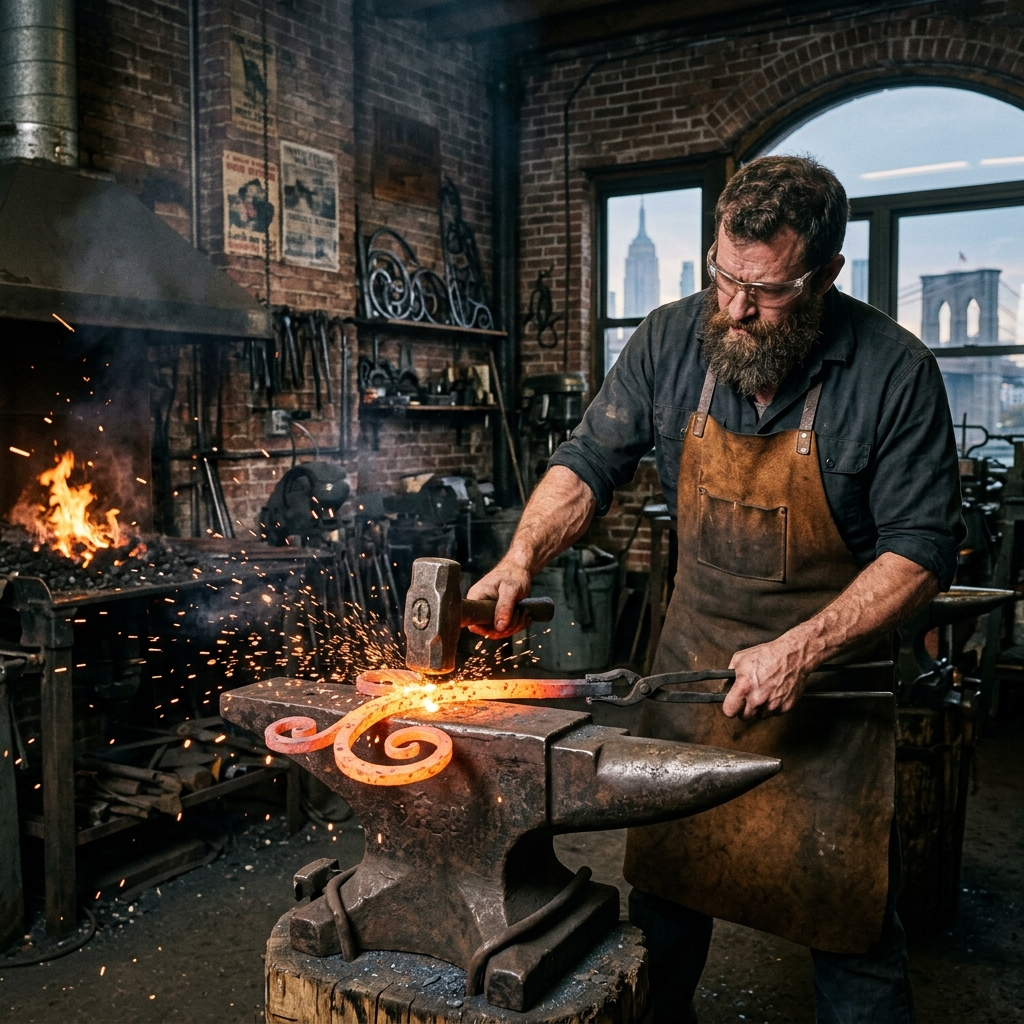
Mass production relies on robotics. Custom fabrication relies on master blacksmiths and certified welders. Blending a weld so it is completely invisible, or applying a hand-rubbed patina, are skills that take years to perfect.
4. Superior Finishes
We utilize multi-step finishing processes, such as hot-dip galvanizing followed by a high-grade powder coat. This ensures your gate or railing won’t be bleeding rust onto your masonry in two years.
The Long-Term Value
While the initial investment in custom architectural blacksmithing is higher, the lifetime cost is often lower.
A poorly fitted, mass-produced exterior gate may need to be replaced after five harsh winters. A custom, galvanized, and properly finished gate will last for decades, adding permanent value and curb appeal to your property.
When evaluating costs, consider whether you are buying a temporary fixture or a permanent architectural element.
Contact our team to discuss your project and receive a custom estimate.